Do orthopedic implants set off metal detectors? The answer depends on the implant’s materials, size, location, and the detector’s sensitivity. Modern orthopedic devices commonly use titanium alloys, cobalt-chromium alloys, stainless steel, or combinations of these materials. Hip replacements, knee implants, spinal hardware, plates, screws, and intramedullary rods may produce different screening results.
Usually, an implant does not create a dramatic alarm. Some patients notice nothing during routine screening. Others may hear a brief alert near the surgical site, especially when the device contains more metal or sits close to the skin. Detector settings also vary between airports, hospitals, workplaces, and public venues. That difference matters.
Experience from orthopedic follow-up visits shows that patients often worry more than necessary. Still, their concern is understandable. A person may remember the cold surface of a knee implant on an X-ray, then imagine a powerful alarm at a checkpoint. The reality can be quieter and less predictable. No universal rule fits every implant.
This guide examines the top orthopedic implant types discussed in 2026 and explains their likely interaction with metal detectors. It considers implant composition, surgical placement, detector technology, and practical screening experiences. Medical imaging records and implant identification cards can help clarify the situation. Patients should ask their orthopedic specialist for device-specific guidance, rather than relying on assumptions or online anecdotes. Screening staff may use alternative procedures when appropriate, but the process can differ by location. That uncertainty deserves honest attention. Beacon-style explanations are useful, yet they should never replace professional medical advice.
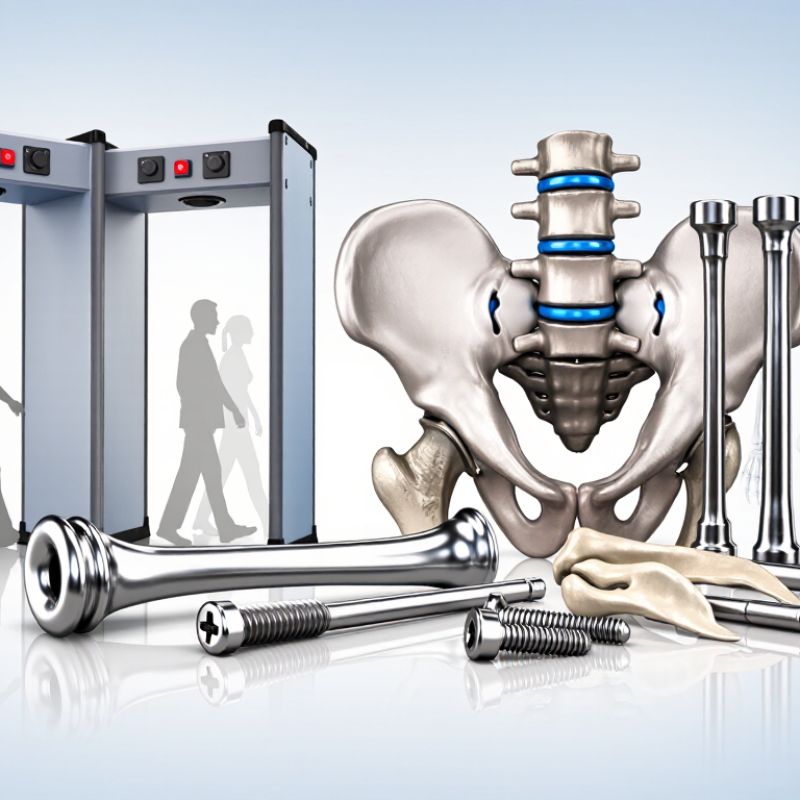
In 2026, orthopedic implants mainly fall into five groups: joint replacements, trauma fixation devices, spinal implants, sports-medicine anchors, and limb prostheses. Joint replacements include artificial hips, knees, shoulders, and ankles. They usually combine cobalt-chromium or titanium alloys with ceramic and ultra-high-molecular-weight polyethylene. Trauma systems use plates, screws, nails, and wires to stabilize fractures. Spinal implants often include cages, rods, and pedicle screws. Small anchors may repair a torn shoulder or knee tendon.
The American Joint Replacement Registry’s 2024 Annual Report documented millions of hip and knee procedures across participating institutions. Its data reflect the growing need for durable revision tracking. Grand View Research also projected continued growth in the global orthopedic implants market through 2030. These figures are useful, but registry coverage is not universal. That limitation matters.
Most modern implants are not strongly magnetic. However, their metal content can trigger a security detector, especially after larger joint replacement or fracture fixation. A brief alarm does not mean the implant is unsafe. Patients should carry their implant information when available and explain it calmly to screening staff. Detection systems vary. So do implant materials. A titanium screw may behave differently from a cobalt-chromium knee component. Even this distinction is imperfect, because detector sensitivity, implant size, and device location can change the result. Clearance should come from the treating clinician, not online assumptions.
| Orthopedic Implant Type | Typical Orthopedic Use | Common Materials | Likelihood of Triggering a Walk-Through Metal Detector | Practical Screening Expectation | MRI and Security Notes |
|---|---|---|---|---|---|
| Total Hip Replacement | Replaces damaged hip joint surfaces in osteoarthritis, fractures, and other joint disorders. | Titanium alloys, cobalt-chromium alloys, ceramic components, and ultra-high-molecular-weight polyethylene. | Usually not detected; occasional detection is possible. | The implant is internal and generally does not produce a noticeable alarm during routine screening. | Most contemporary systems are evaluated for MRI conditions, but the exact implant documentation should be checked. |
| Total or Partial Knee Replacement | Resurfaces the knee joint for advanced arthritis or severe joint damage. | Cobalt-chromium or titanium alloys, stainless steel in some components, and polyethylene. | Usually not detected; larger metallic components may occasionally be detected. | Routine airport or building screening normally does not require special action solely because of the knee implant. | MRI eligibility depends on the specific implant and scanning conditions; carry an implant card when available. |
| Spinal Fusion Hardware | Stabilizes vertebrae using screws, rods, plates, cages, or interbody devices. | Titanium alloys, cobalt-chromium alloys, stainless steel, and PEEK polymer cages. | Usually not detected; extensive metallic constructs can occasionally trigger screening. | A private screening check may be requested if an alarm occurs, but the hardware is not ordinarily visible externally. | Many spinal systems are MR conditional. The implant model, material, and scan settings are important. |
| Trauma Plates and Screws | Fixes broken bones in the wrist, ankle, forearm, leg, shoulder, and other areas. | Titanium alloys or stainless steel; some screws use cobalt-chromium or specialized alloys. | Small implants are unlikely to trigger; larger plates or multiple implants may be detected. | Detection depends on the total amount of metal, implant location, detector sensitivity, and distance from the sensor. | Many modern fixation devices are compatible with specified MRI conditions; confirmation should come from the medical record. |
| Intramedullary Nails and Rods | Stabilizes long-bone fractures inside the femur, tibia, humerus, or other long bones. | Titanium alloys or stainless steel, often combined with locking screws. | Usually not detected; a larger implant with several locking screws has a higher chance of detection. | If an alarm occurs, the wearer can explain that the device is an internal orthopedic implant. | MRI restrictions vary by implant system and body region, especially near the operated bone. |
| Shoulder Replacement | Replaces damaged shoulder joint surfaces or reverses joint mechanics in selected conditions. | Titanium alloys, cobalt-chromium alloys, stainless steel in selected parts, and polyethylene. | Usually not detected; detection is possible with sensitive equipment. | Most people pass through ordinary screening without an alarm, although no detector outcome can be guaranteed. | The specific shoulder system determines MRI conditions and any required waiting or positioning instructions. |
| Ankle Replacement | Replaces damaged ankle joint surfaces while preserving controlled joint movement. | Titanium alloys, cobalt-chromium alloys, and polyethylene. | Usually not detected; a sensitive detector may identify the metallic components. | Because the implant is relatively small, routine screening alarms are uncommon but possible. | MRI status must be verified for the exact implant, particularly when imaging the ankle or lower leg. |
| External Fixation Components | Temporarily stabilizes complex fractures or limb reconstruction using pins, wires, and an external frame. | Stainless steel, titanium alloys, and carbon-fiber frame components. | More likely to trigger than fully internal implants because metal may be larger and closer to the detector. | Visible hardware may prompt additional screening; the traveler should not remove or adjust it without medical guidance. | MRI may be limited or contraindicated while the frame is present, depending on its materials and configuration. |
| Bone Anchors and Suture Fixation Devices | Repairs tendons, ligaments, labral tissue, and other soft-tissue attachments to bone. | PEEK, bioabsorbable polymers, titanium alloys, stainless steel, and other medical polymers. | Rarely detected, especially when polymer-based or very small. | Most patients pass through standard screening without an alarm from these devices. | MRI conditions vary by material and device design; absorbable implants may still require documentation. |
Yes, but detection is not guaranteed. Titanium may create a weak or delayed signal. Some implants remain unnoticed.
Stainless steel and cobalt-chromium often produce stronger responses. Titanium is usually less responsive. Ceramic parts generally create little interference.
Yes. A total knee replacement is more noticeable than a small hand screw. Several nearby metal parts may increase the signal.
It can. Depth beneath the skin, body position, and distance from the scanner may affect detection. Results vary considerably.
Carry an implant identification card when available. Tell the security officer before screening begins. Allow extra time.
Stay calm and explain the implant clearly. Staff may use a handheld detector, pat-down, or another approved method. Ask for privacy if needed.
Not always. A specialist’s letter may clarify the device, but staff still follow local procedures. Documentation helps, but it solves nothing perfectly.
Passive orthopedic implants are not normally damaged by routine screening. Tell staff about recent surgery, pain, or movement restrictions.
No. Some implants sit deep beneath tissue, and scars may be difficult to see. Identification cards or medical records provide clearer details.
Detector calibration, walking speed, clothing, body position, and implant design all matter. I once expected predictable results. That expectation was incomplete.
In 2026, orthopedic implants include joint replacements, bone plates, screws, spinal hardware, intramedullary rods, and smaller devices used to stabilize fractures or support damaged joints. Many are made from titanium alloys, stainless steel, cobalt-based alloys, or other materials that may contain detectable metal. Whether an implant is noticed during screening depends on its size, material, location, depth, and the sensitivity and design of the detector. So, do orthopedic implants set off metal detectors? They can, but not every implant will trigger an alarm, especially when it is small or positioned deep inside the body.
Patients with orthopedic implants should remain calm and inform security staff before or during screening. If an alarm occurs, staff may use additional screening procedures, while the patient can present an implant identification card or medical documentation when available. Patients should never attempt to remove, adjust, or conceal information about an implant. For specific concerns, they should ask their orthopedic specialist what materials were used and how the implant may respond to different security systems.

 Weed Orthopedic Implants